

在鄉村振興戰略的持續推進下,本項目——“隱逸太行·院納天地”——立足於河南省林州市石板岩鎮太行大峽穀的壯闊自然背景之中,以建築為媒介,重新詮釋人、自然與地域文化之間的共生關係。設計秉持“人與自然和諧共生”的綠色發展理念,通過對傳統聚落空間結構的現代表達,將地域文脈的延續與當代旅居體驗相融合,在村落原有雜亂肌理中,塑造出一片靜謐而具有精神性的棲居場所。
Amid the ongoing Rural Revitalization Strategy, the project “Secluded in Taihang · Courtyard Embracing Heaven and Earth” is situated within the magnificent natural backdrop of the Taihang Grand Canyon in Shibanyan Town, Linzhou City, Henan Province. Using architecture as a medium, it reinterprets the symbiotic relationship between humans, nature, and local culture. Guided by the green development philosophy of “harmonious coexistence between humanity and nature,” the design integrates the continuation of regional cultural heritage with contemporary travel experiences through a modern expression of traditional settlement spatial structures. Within the originally disordered fabric of the village, it creates a tranquil and spiritually resonant place of dwelling.
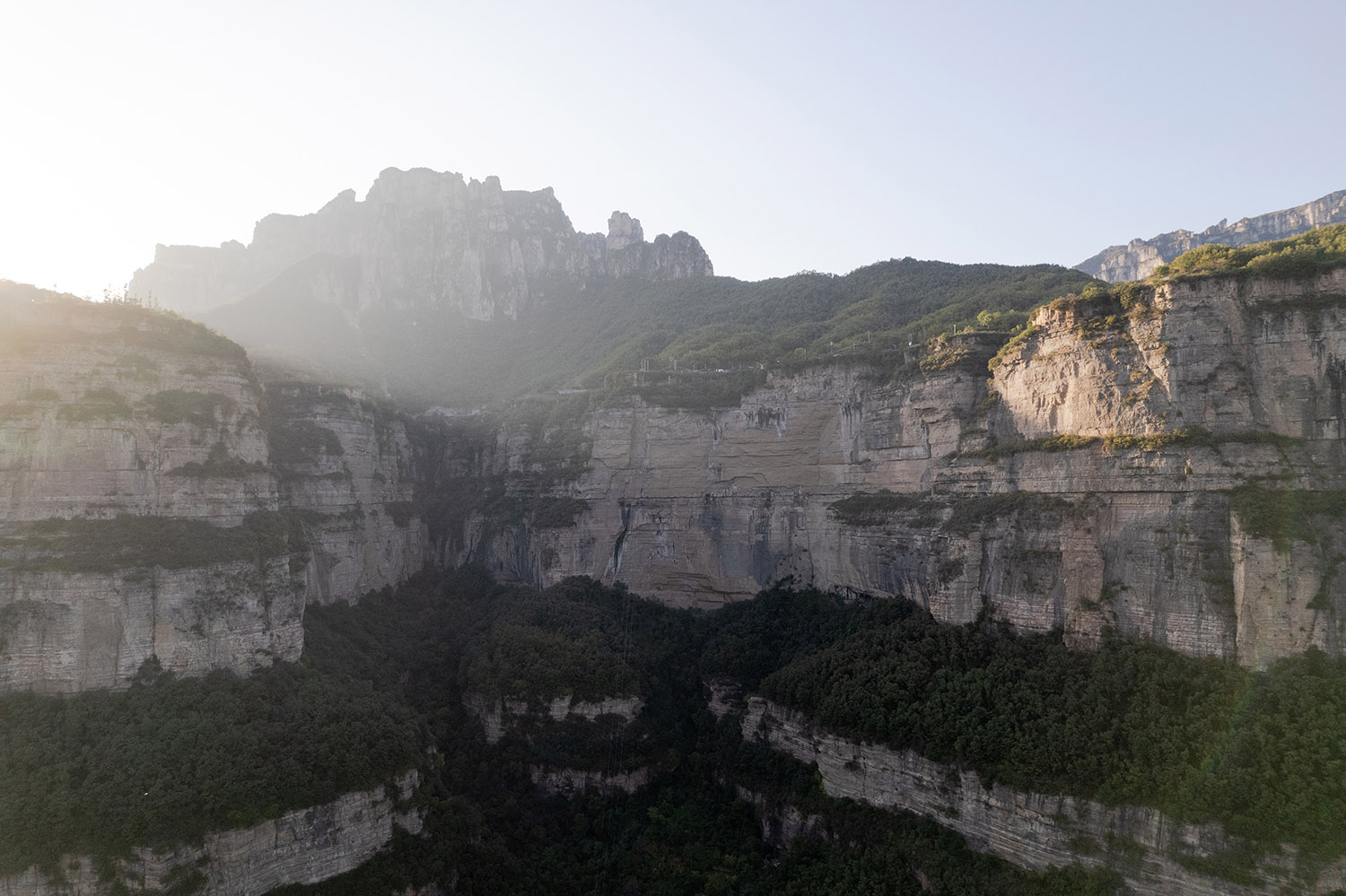
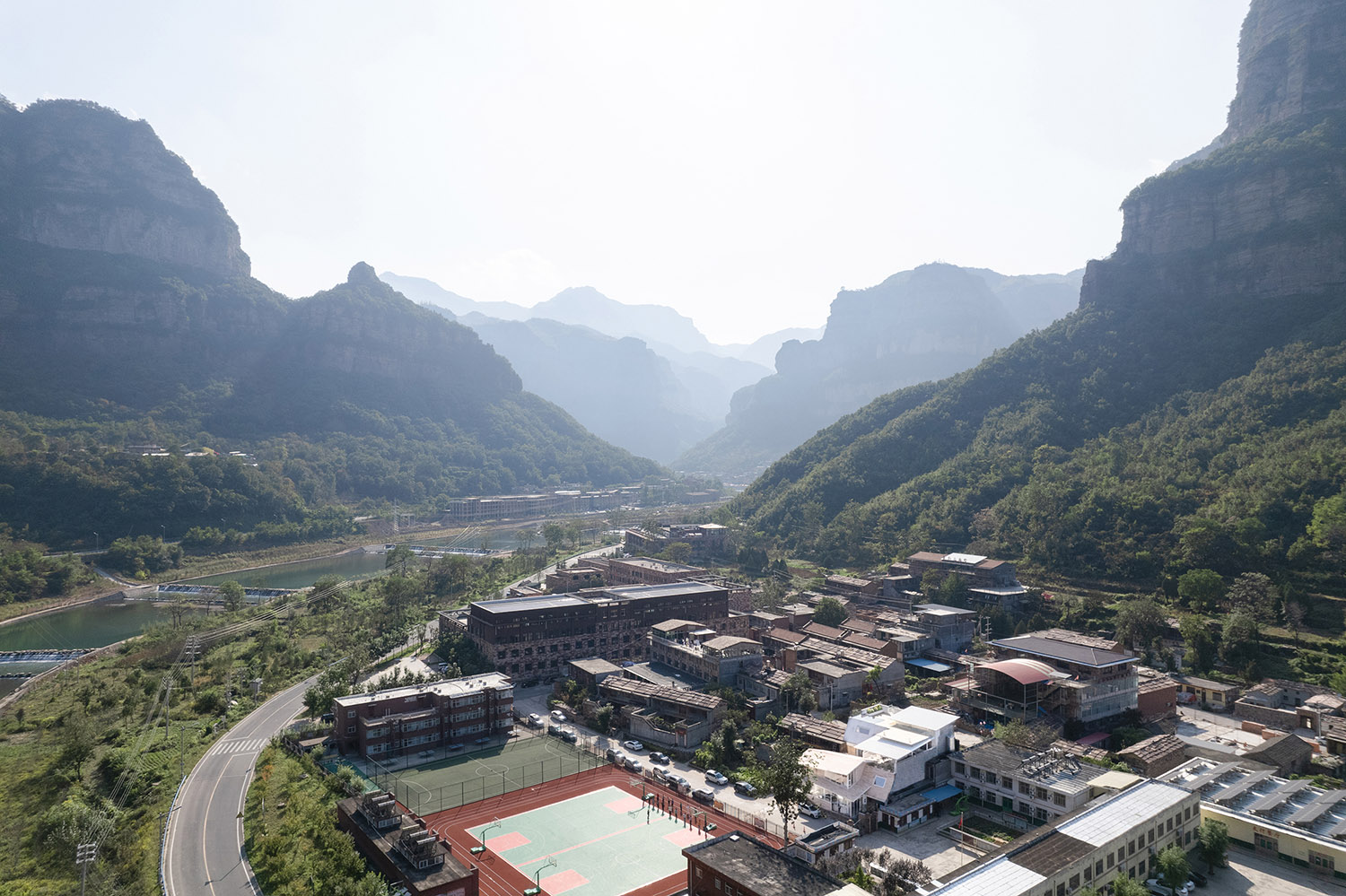
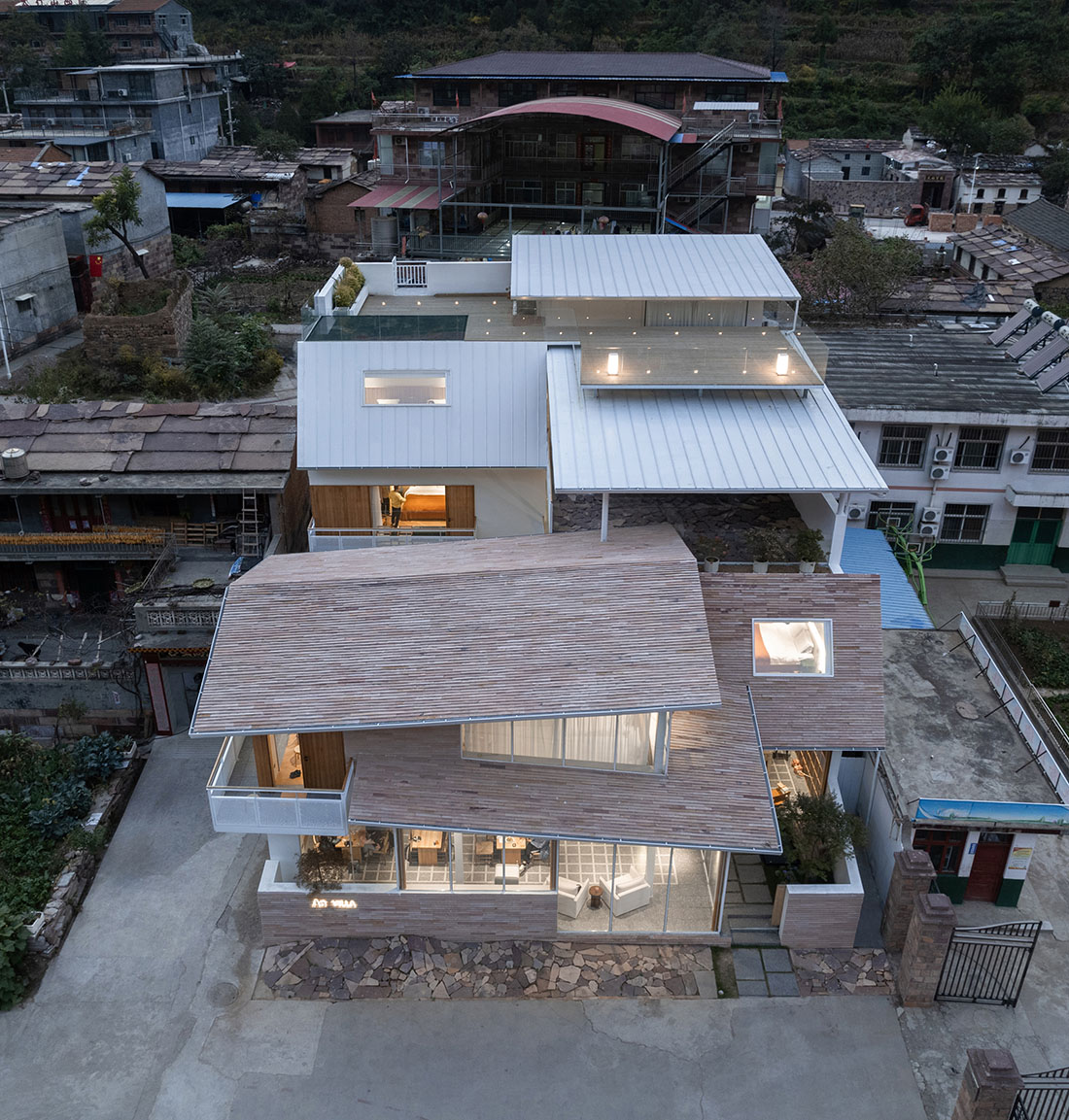
項目基地位於太行大峽穀核心區域,周邊群山環繞,景觀資源豐富,旅遊人流密集。然而場地條件複雜:北側緊鄰鎮學校主入口,東側為操場,西側為四層寫生公寓,南側與鄰舍僅一街之隔。麵對此種語境,設計采取“外閉內開”的空間策略——建築外部形態保持克製,不過分凸顯於村落輪廓,轉而通過內向性的圍合院落組織空間秩序,營造出隔離喧囂的淨土。同時,豎向通過多層次平台與坡屋頂的疊加,拓展觀景視野,實現從外部混沌現實到內部詩意體驗的轉換。
The project site is located in the core area of the Taihang Grand Canyon, surrounded by mountains, rich in landscape resources, and frequented by a dense flow of tourists. However, the site conditions are complex: it is adjacent to the main entrance of the town school to the north, faces a playground to the east, is flanked by a four-story sketching apartment to the west, and is separated from neighboring houses by only a street to the south. In response to this context, the design adopts an “externally closed, internally open” spatial strategy—the external form of the building remains restrained, not overly prominent within the village silhouette. Instead, it organizes spatial order through introverted, enclosed courtyards, creating a pure land isolated from the hustle and bustle. Vertically, the design incorporates multi-level terraces and overlapping pitched roofs to expand viewing perspectives, facilitating a transition from the chaotic external reality to an internal, poetic experience.
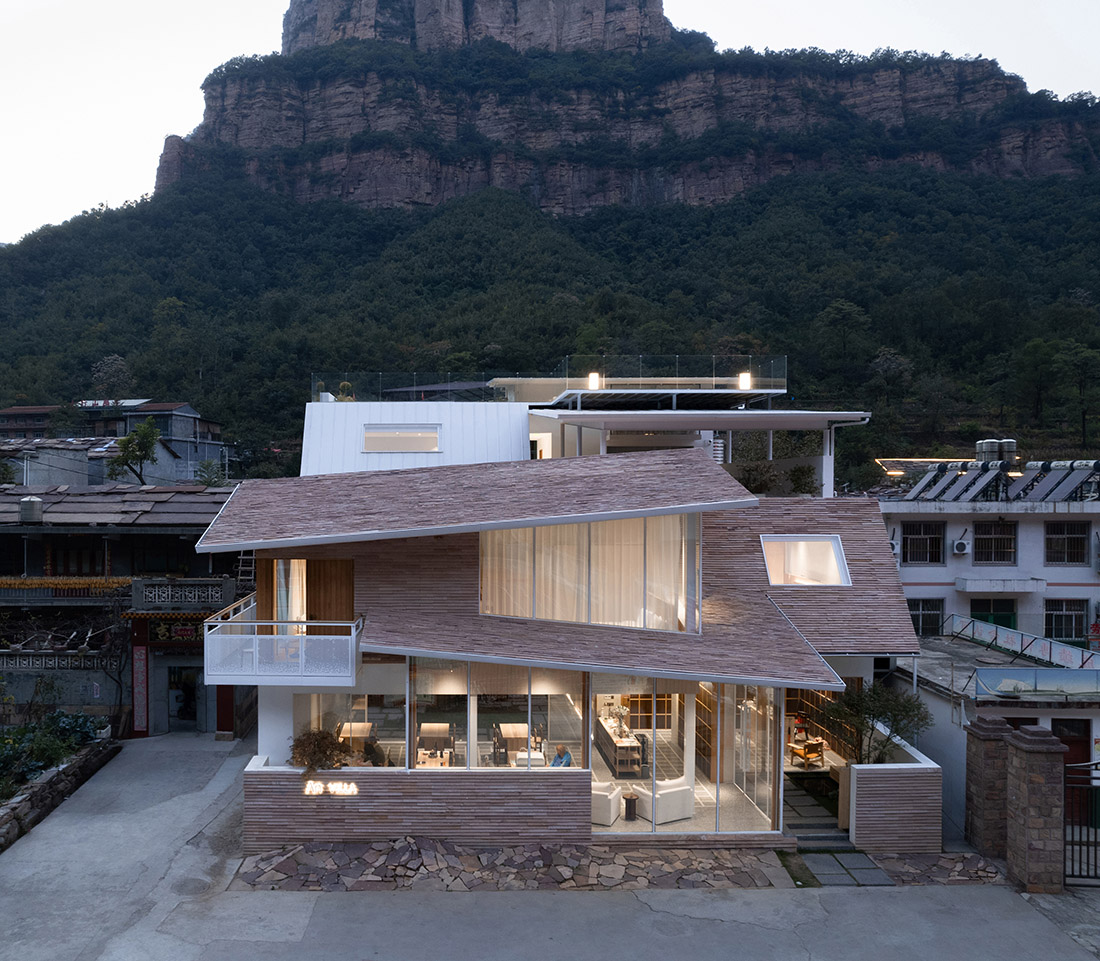
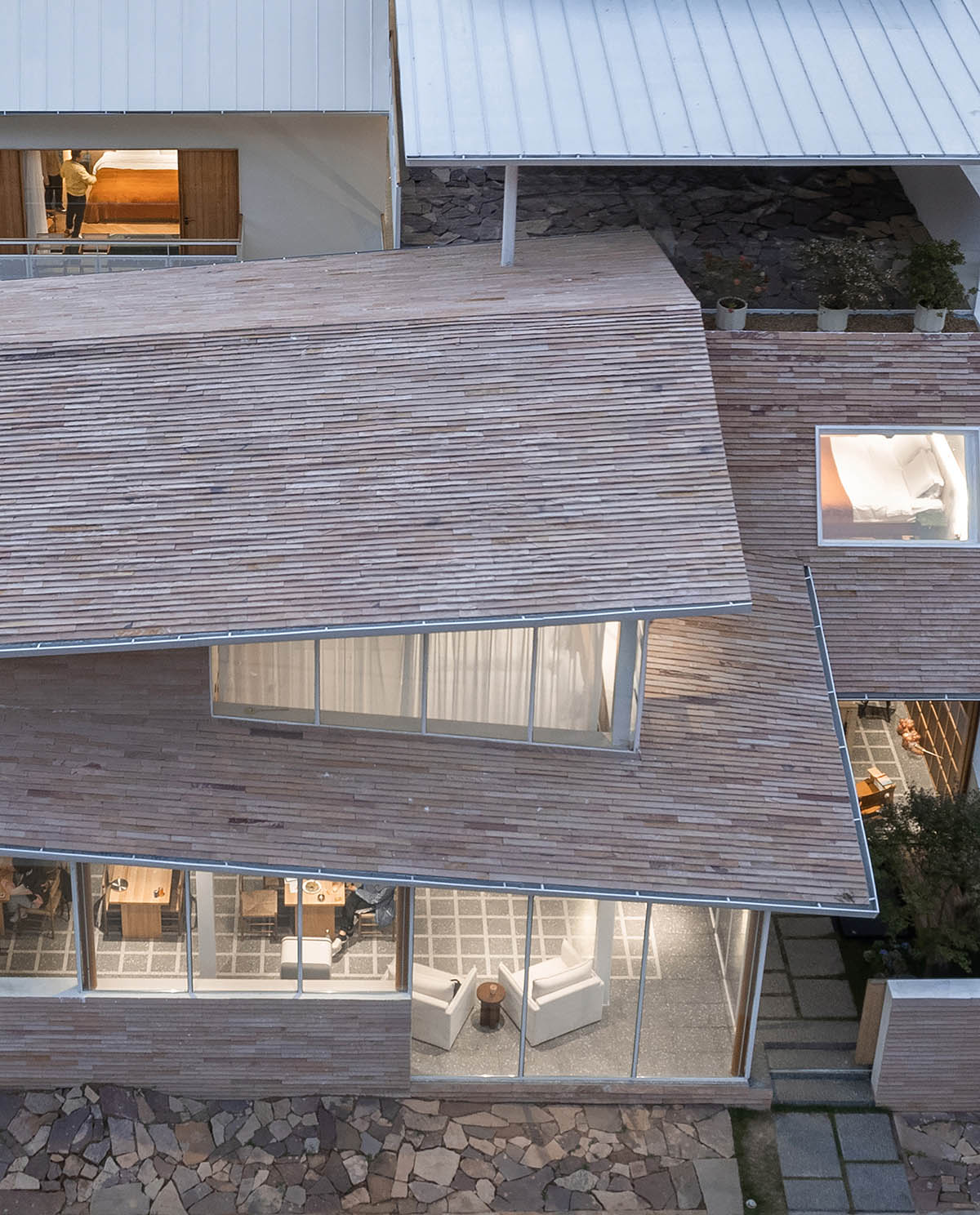
建築整體以圍合式院落為基本布局,回應了周邊環境的壓迫感與視線幹擾。東側臨近道路設置公共功能區,涵蓋接待、餐飲等動態內容;西側則環繞庭院布置客房區域,形成清晰的“動 靜”分區邏輯,功能與流線組織明確。三層及屋頂部分設置了多個觀景平台與休憩區域,平台與坡屋頂交錯穿插,創造出豐富的空間層次與行走體驗。
The overall layout of the building follows an enclosed courtyard pattern, addressing the sense of oppression and visual interference from the surrounding environment. The eastern side, close to the road, accommodates public functional areas, including reception and dining—more dynamic spaces. The western side, surrounding the courtyard, houses guest rooms, establishing a clear division between “active” and “quiet” zones, with well-defined functions and circulation. The third floor and rooftop feature multiple viewing platforms and resting areas, where platforms and pitched roofs interweave, creating rich spatial layers and a dynamic walking experience.





評論(0)