

建築、人、自然的共生呼吸
序|Preface
生生不息|Life Ever-Flourishing
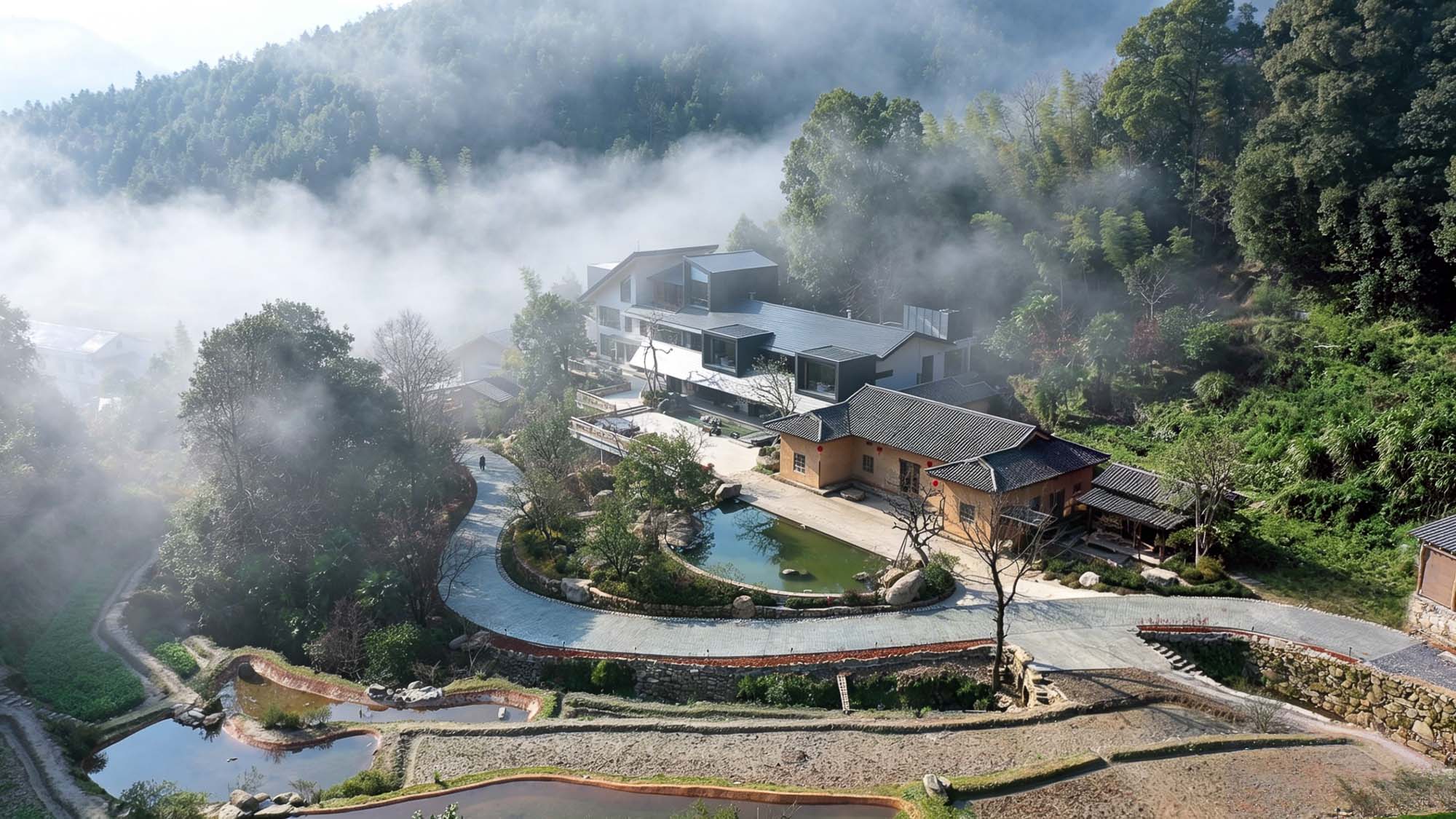
循著山野的脈絡走,重拾“生”之向往。周洛芸溪穀,選址中國瀏陽腹地連綿起伏的丘陵褶皺裏,靜嵌於周洛大峽穀旁的原生山野間。初到項目現場,我們被背倚蒼翠層疊的山巒,順著地勢綿延舒展肌理的自然稟賦所感動。四方或是山林,或是梯田,順山穀等高線曲折遊走,麵麵皆不同,山、穀、溪、林,在此交織成渾然一體的自然野趣場域。這片土地賦予我們最強的感受在於:它不是為了震撼你而存在,而是為了容納你而存在;這是瀏陽周洛,獨有的溫潤與厚重。回觀我們的生活,在高速運轉的現代,某種關於“生”的細膩感知正在變得遲鈍;而不斷追求體驗的,僅僅是高品質的“活”。當效率成為標尺,我們習慣了將自然視為屏幕裏的風景,將生活切割為精準的日程而非體驗。在這線性的生存管道中兜轉時,我們不經意間忽略了對自我的接納,淡忘了食物原本的來處,也疏遠了身體與泥土、風、陽光之間那種原始的溫熱聯係。而當我們把生活二字解構後,你看到了什麼?生,是存在的感知;活,是生存的靜滯。於是,圍繞著“生”之重塑的營造,我們記錄了這一場峽穀深處的蛻變。周洛芸溪穀的嚐試,正是為了回應這份久違的渴望。我們無欲征服或重塑自然,而是以哲學的自覺,把建築還原成土地的一部分——讓它像山間的草木一樣,順著等高線呼吸,隨著季節更迭。這既是美學的回歸,也是人文的修補。我們保留老宅的斑駁,是為記憶尋得一處容器;我們釋放新建築的張力,是為心靈擱放,尋得一處支點。在這裏,生,不是宏大的概念,而是具體的動作,是修複一塊被擾動的土地,是等待一束光穿過落地窗,是讓生活重新找回與天地同頻的節奏。這便是我們理解的生生不息——不是野蠻拓疆,而是安靜滋長。
Following the veins of the mountains and wilderness, we rediscover our longing for “life.”Nestled deep within the rolling hills of Liuyang, China, Yunxi Valley sits quietly beside the raw mountain wilderness of the Zhouluo Grand Canyon. On our first visit, we were moved by the lush, tiered peaks at its back and the natural rhythm of the land as it unfolded along the contours of the terrain. All around are forests or terraced fields, winding along the valley’s contour lines—each view unique—where mountains, valleys, streams, and woods weave together into a seamless tapestry of wild beauty. What struck us most about this land is that it does not exist to astonish you, but to embrace you. This is the distinctive gentleness and depth of Zhouluo in Liuyang. Looking back at our lives, in this age of high-speed motion, our subtle perception of “being alive” has dulled; what we pursue now is merely a high-quality way of “living.” When efficiency becomes the measure, we grow accustomed to seeing nature only through screens, and life becomes segmented schedules rather than lived experiences. Moving through these linear pipelines of survival, we unconsciously neglect self-acceptance, forget where our food truly comes from, and drift away from the primal warmth between our bodies and the earth, wind, and sunlight. When we deconstruct the word “life,” what do you see? Sheng is the awareness of existence; Huo is the stillness of mere survival. Thus, centering on the reconstruction of “life,” we documented this transformation deep within the canyon. The endeavor of Yunxi Valley is an answer to this long-missed yearning. We have no desire to conquer or reshape nature; instead, with philosophical intent, we return architecture to being part of the land—allowing it to breathe along the contour lines like the plants of the mountain, shifting with the seasons. This is both a return to aesthetics and a restoration of humanity. We preserve the weathered traces of the old residence to give memory a vessel; we release the tension of new structures to offer the soul a place to rest.Here, life is not a grand abstraction, but a tangible act: mending a disturbed patch of soil, waiting for a beam of light to pass through a French window, allowing life to rediscover its rhythm in harmony with the heavens and the earth. This is our understanding of “life ever-flourishing”—not a savage expansion, but a quiet growth.
∇ 項目鳥瞰,aerial view of the project
第一章|生之根基
Chapter One|The Foundation of Life
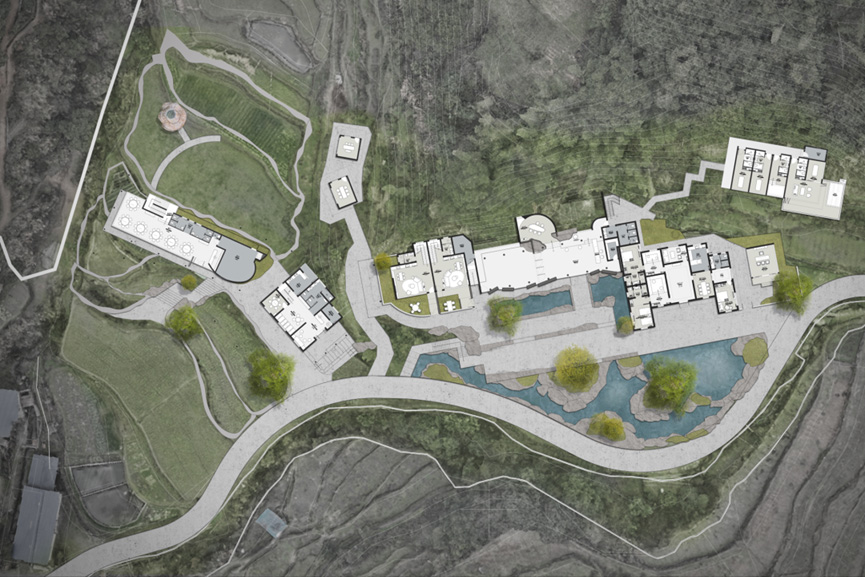
建築從未打斷山脈的起伏,像匍匐於山坡之上的藤蔓。周洛芸溪穀一期,建築依循山形走向層層錯落,如原生林木棲落在不同標高的台地之上,建築單體的標高係統都直接對話於原始地形與梯田的起伏。從手繪等高線分析圖到建成後的航拍俯瞰,我們可以看到整個建築群像是山體的一次自然呼吸,其形態與土地肌理高度吻合——這不僅是物理層麵的嵌入,更是一種能量流動的承接與對話。
Architecture never interrupts the rise and fall of the mountains; it lies upon the slopes like vines creeping along the hillside. In the first phase of Yunxi Valley, the buildings cascade along the contours of the mountain, like native trees resting on terraces at different elevations. Each structure’s height directly converses with the undulating terrain and terraced fields. From hand-drawn contour analyses to post-completion aerial views, the entire complex appears as a natural breath of the mountain, its form seamlessly aligned with the texture of the land. This is more than physical integration—it is an acceptance and dialogue of energy flow.
∇ 場地平麵,site plan
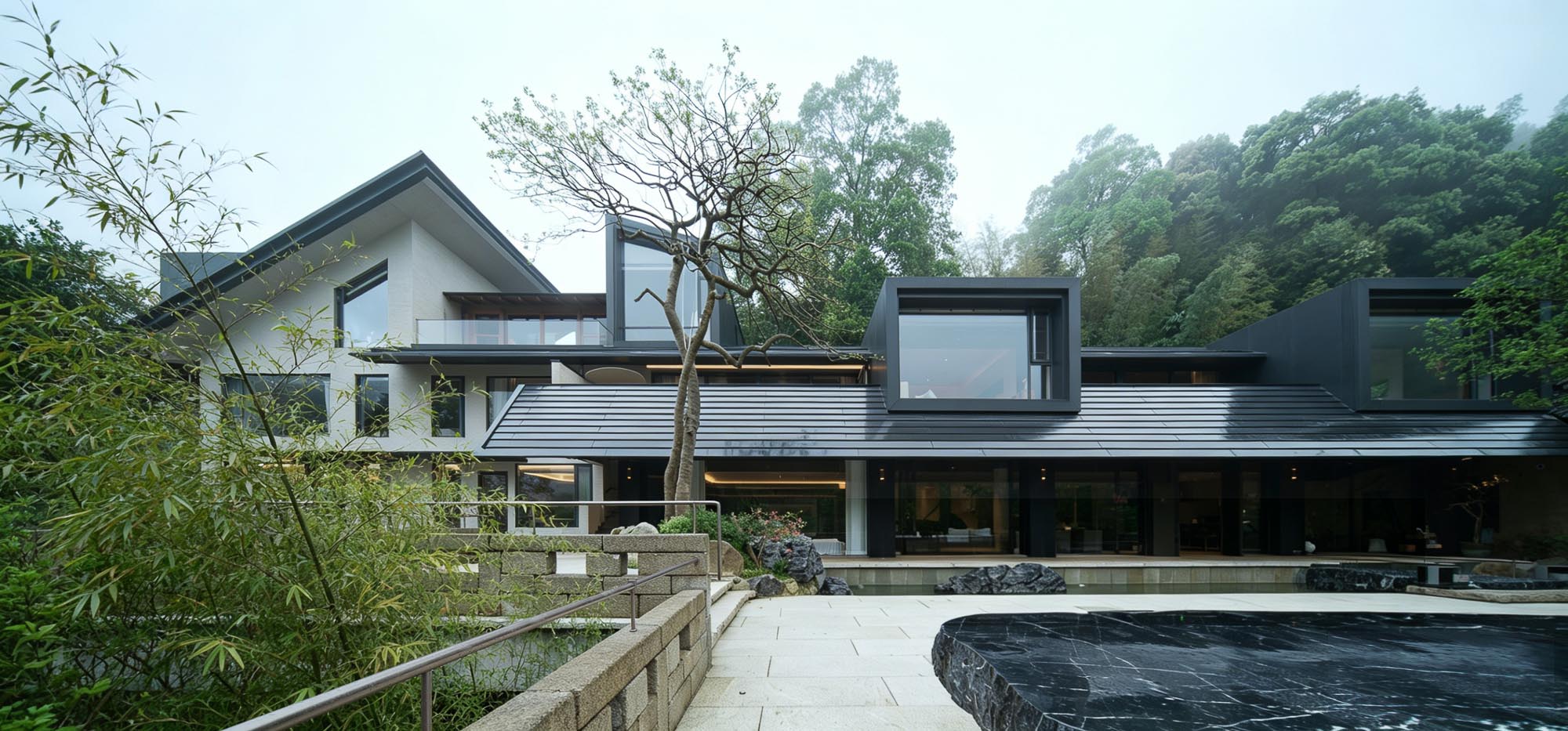
∇ 項目外觀,aerial view of the project
∇ 項目外觀,aerial view of the project
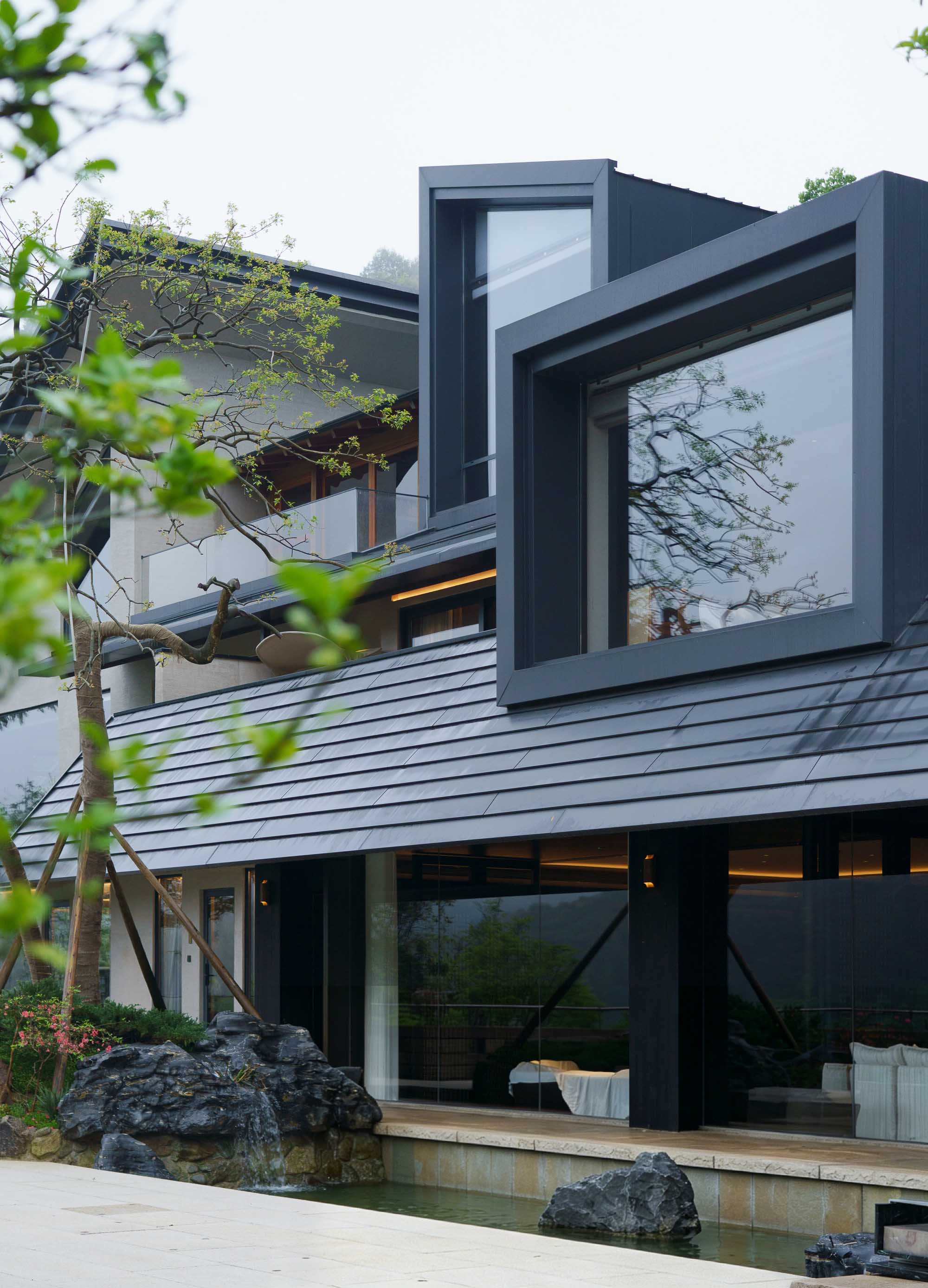
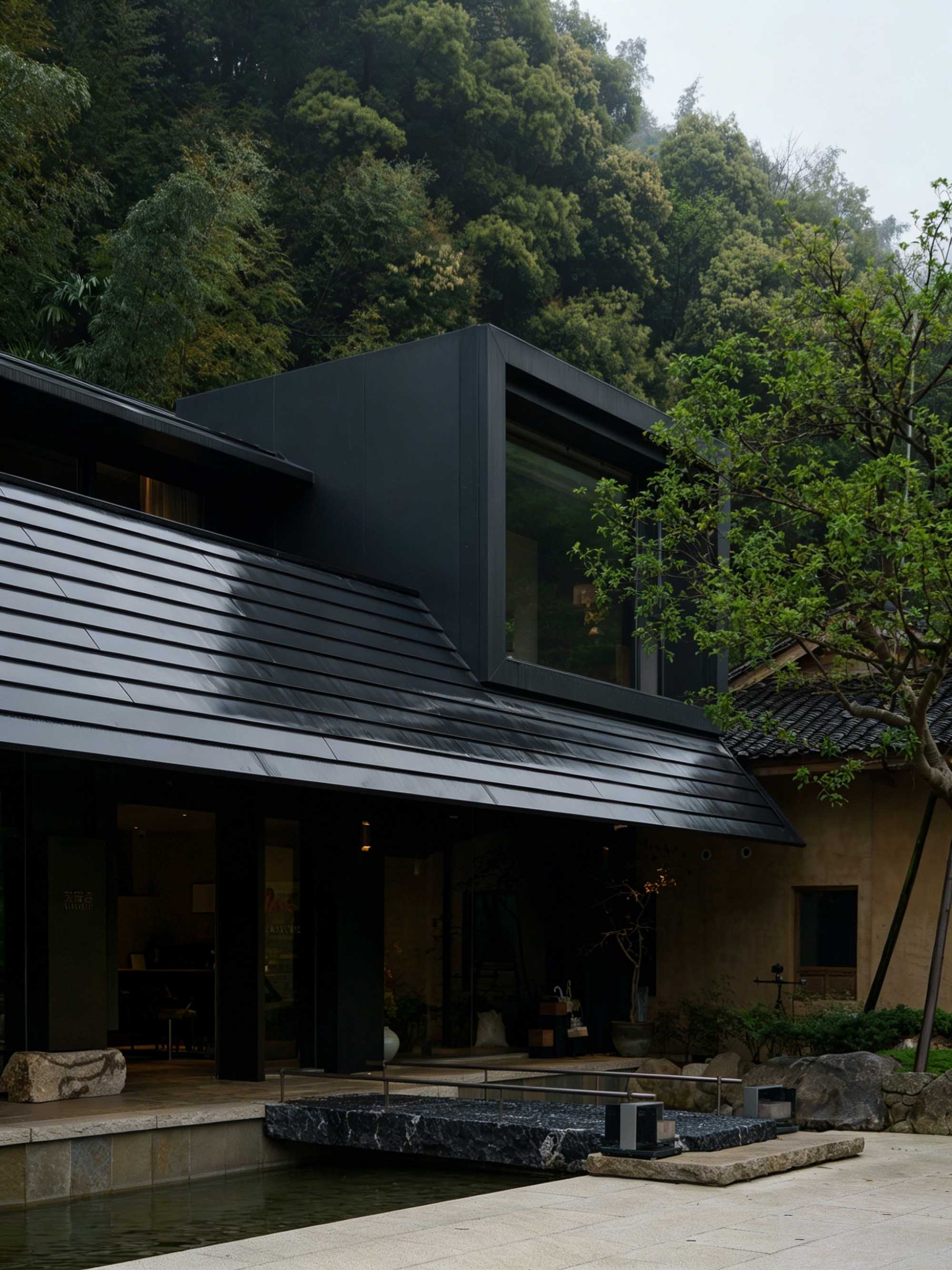
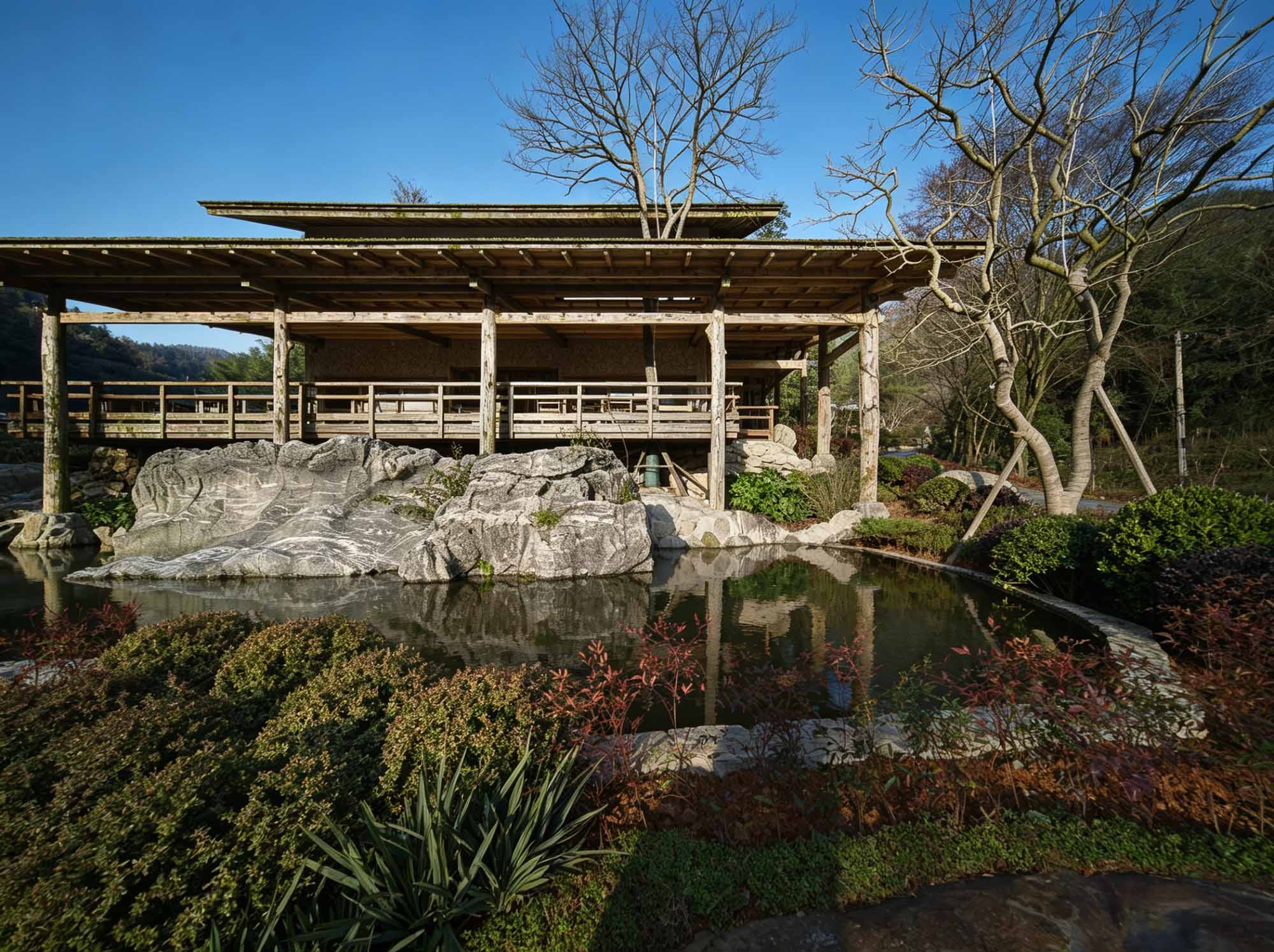
“生”的第一重對話:建築與這片土地,同頻的呼吸。建築,是從地貌中生長出來的秩序。沒有強加的形式,隻有對山勢起伏的觸感。麵對一片傾斜起伏的坡地,我們沒有做大範圍的平整與大開大挖,轉而以等高線作為設計最原初的語言。我們想做到的是:拒絕讓建築成為山體上的異物,而是像一條匍匐於大地之上的藤蔓,沿著山脊的天然輪廓舒展身軀。老宅部分修舊如舊,毗鄰的新建築與之形成脈絡連接,讓建築前場的平台從陡峭的岩壁上生長出來,以數米高的架空支柱層將體量輕輕托起,讓雨水與山風自由穿行其下。這些獨立的點狀基礎支撐替代大麵積開挖的同時,也讓原有土層的滲流路徑得以保留,順著等高線方向逐級退台,既化解了高差,又為小型植被與昆蟲預留了縫隙。
The first dialogue of “life”: architecture and the land breathing in unison.Architecture is order grown from the landform. There is no imposed form—only the tactile sensation of the mountain’s rise and fall. Confronted with sloping terrain, we avoided large-scale leveling or excavation, choosing instead to use contour lines as the primal language of design. Our aim was to prevent the buildings from becoming alien objects on the mountain, allowing them instead to sprawl like vines along the ridge’s natural outline.The old residence was restored faithfully to its original state, while adjacent new structures formed a connected lineage with it. The forecourt platforms emerge from steep rock faces, elevated by tall stilts so that rain and mountain winds can pass freely beneath. These independent point foundations replaced extensive excavation, preserving the original soil infiltration pathways. Terraces step down along the contour lines, resolving elevation changes while leaving gaps for small plants and insects.
∇ 項目外觀,aerial view of the project
第二章|生之呼吸
Chapter Two|The Breath of Life
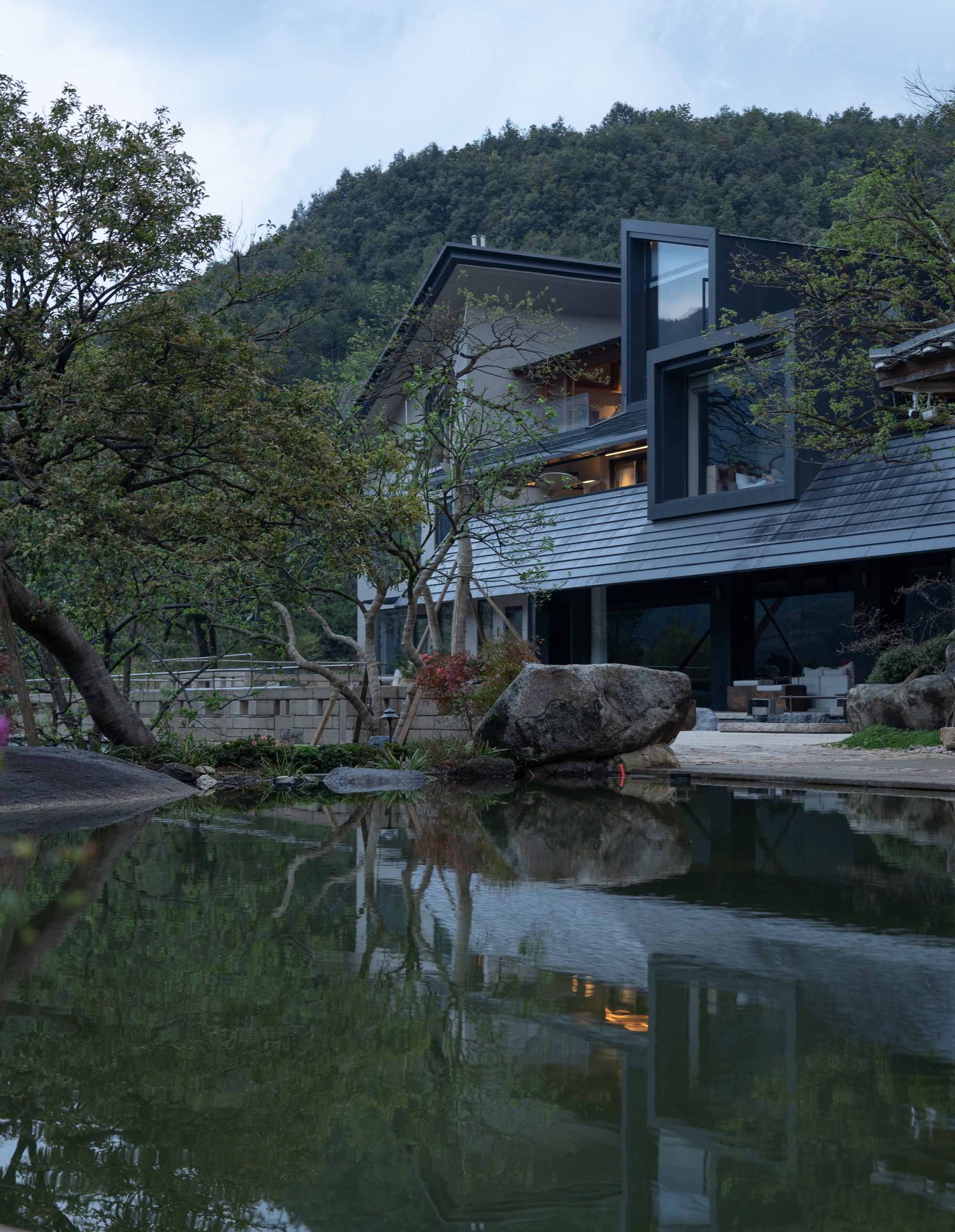
建立一種鬆散的連接,允許視線與氣流的貫通,使封閉的各個單體轉化為具有呼吸性的群落。周洛芸溪穀首開組團,由碧琳琅會所、民宿酒店、江氏老宅、餐廳配套組成,沿山脊腰線上有序銜接。設計要點梳理後,我們認為有如下難點:沿山脊散布的單體,如何建立空間秩序?新舊建築銜接,如何權重遺存與當代?多重業態,如何實現體驗流線的絲滑?房間視野與建築立麵關係,如何平衡?如何實現建築、人、自然的共生呼吸?
A loose connection allows sightlines and airflow to penetrate, transforming enclosed units into a breathing community. The initial cluster consists of the Bilinlang Club, boutique hotel, Jiang Family Old House, and supporting dining facilities, linked orderly along the mid-slope of the ridge. Key design challenges emerged: How to establish spatial order among scattered units? How to balance heritage and modernity in connecting old and new structures? How to ensure smooth experiential flow across diverse programs? How to harmonize room views with façade relationships? How to achieve symbiotic breathing between architecture, people, and nature?
∇ 建築與環境之間的對話,the dialogue between the building and the environment
相關文章推薦




評論(0)