

01 願景與統籌:高密度肌理下的技術集成與空間織補
Vision and Coordination: Technical Integration and Spatial Stitching within Dense Urban Fabric
三裏屯北區的更新並非單純的界麵重塑,而是針對高密度城市存量空間的一次深度“縫合”。項目致力於將北區從原有的商圈邊緣逆轉為具備全球影響力的“目的地型”旗艦集群。作為本項目的“技術總牽頭”,中國建研院(CABR)城鄉規劃院-城市與建築設計分院團隊憑借全過程管控優勢,實現了從前期谘詢、方案深化到施工圖落地的完整技術閉環。在整合消防性能化論證、機電、綠建及BIM協同等多維度專項支持的基礎上,CABR構建了“統籌設計與技術集成”的協作體係,精準調和了頂奢品牌的高標準敘事與複雜既有建築的空間約束,從而在宏觀尺度織補城市脈絡,在微觀層級縫合功能斷層。
The renewal of Sanlitun North Area is not merely a reshaping of its interface, but a deep “suturing” of high-density urban existing space. The project is committed to transforming the North Area from the former periphery of the commercial district into a globally influential “destination”-oriented flagship cluster. As the “technical lead” of this project, the Urban-Rural Planning Institute – Urban and Architectural Design Branch of the China Academy of Building Research (CABR), leveraging itsadvantages in whole-process control, has achieved a complete technical loop from preliminary consulting and design development to construction drawing implementation. On the basis of integrating multi-dimensional specialized support such as fire performance-based design, MEP, green building, and BIM coordination, CABR established a collaborative system of “integrated design and technical integration,” precisely reconciling the high-standard narrative of top luxury brands with the spatial constraints of the complex existing building, thereby weaving the urban fabric at the macro scale and suturing functional gaps at the micro level.
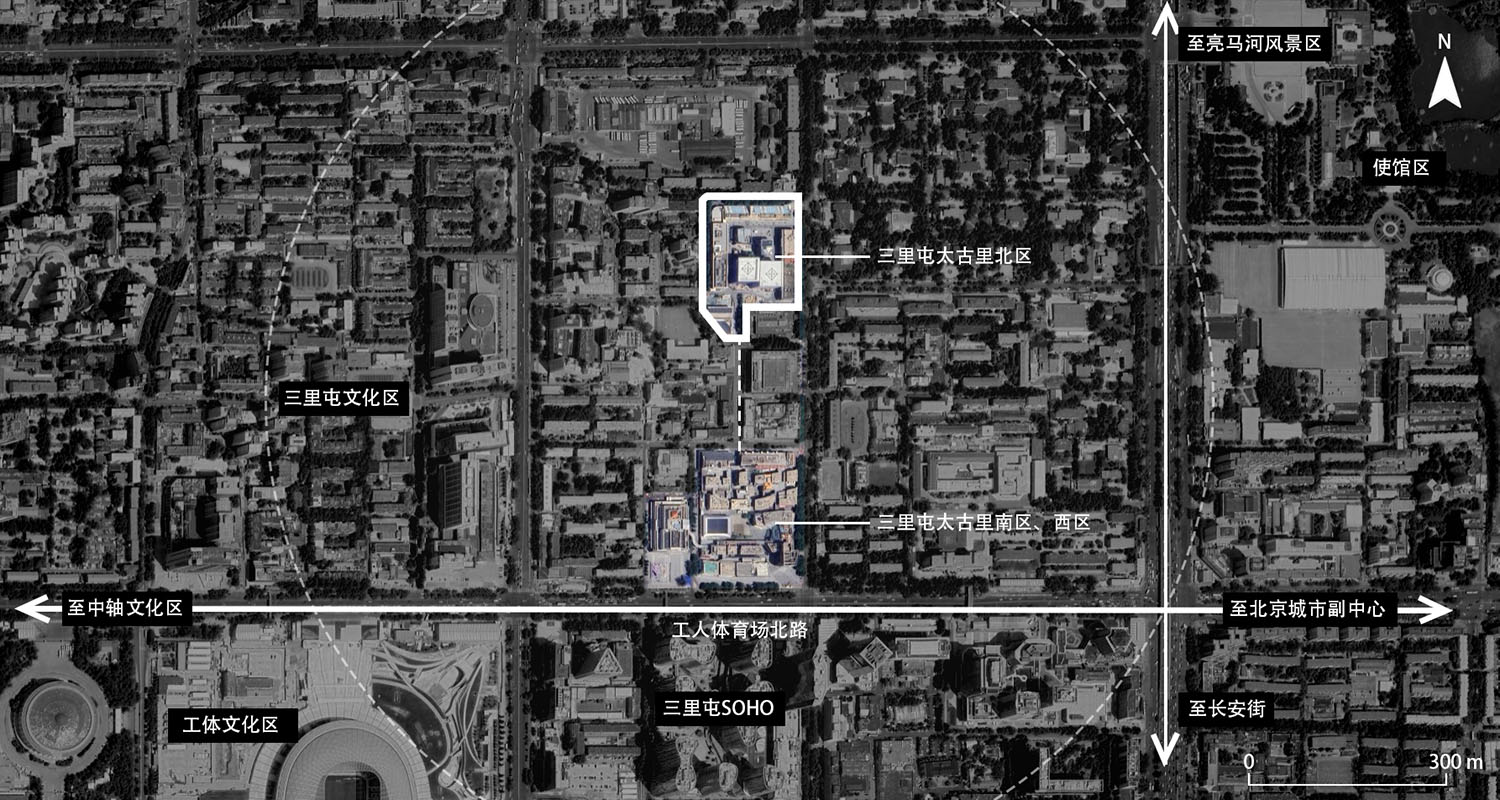
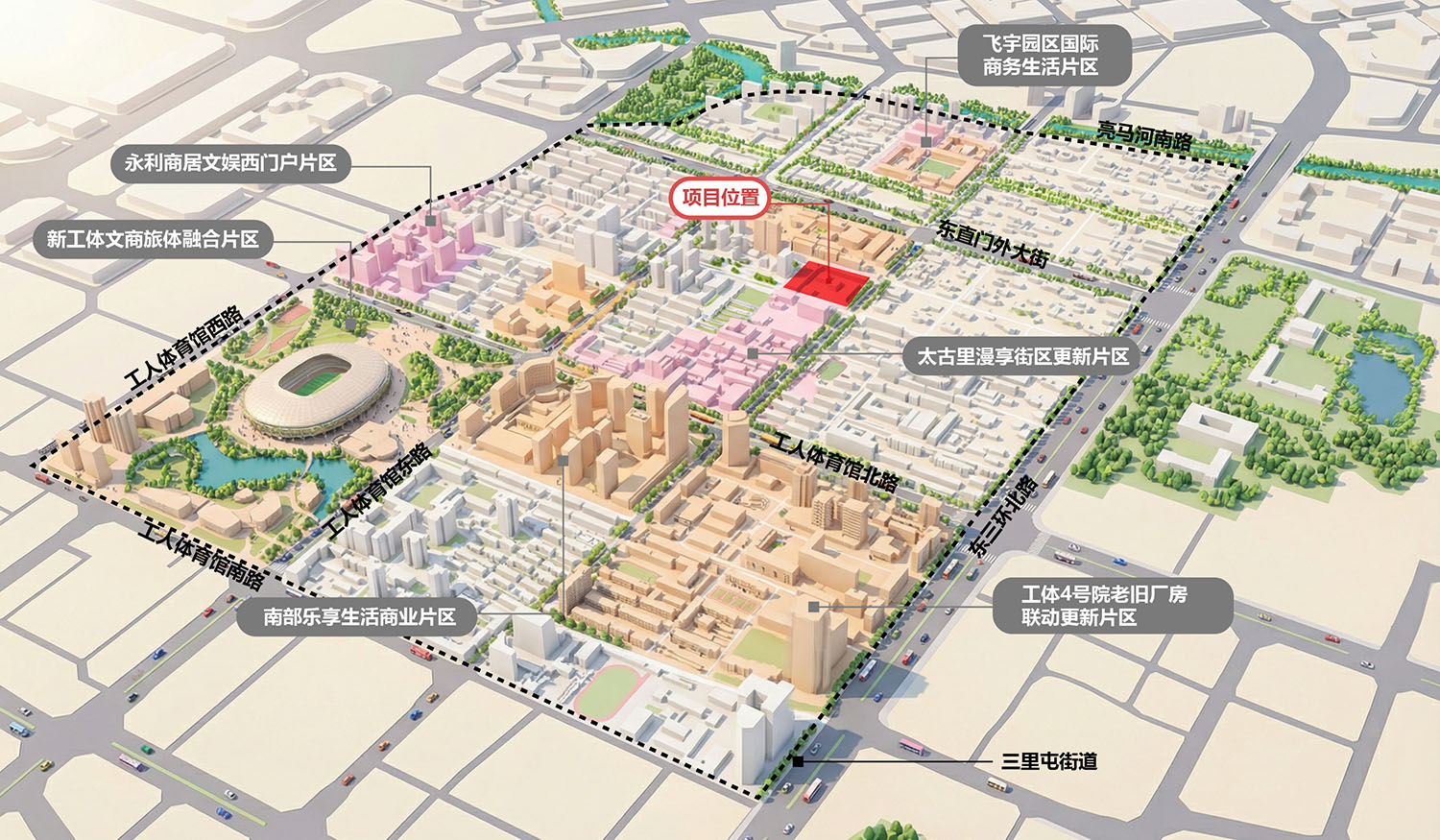
∇ 項目區位 / Location
02 秩序重塑:三級空間結構
Order Reconstruction: Three-tier Spatial Structure
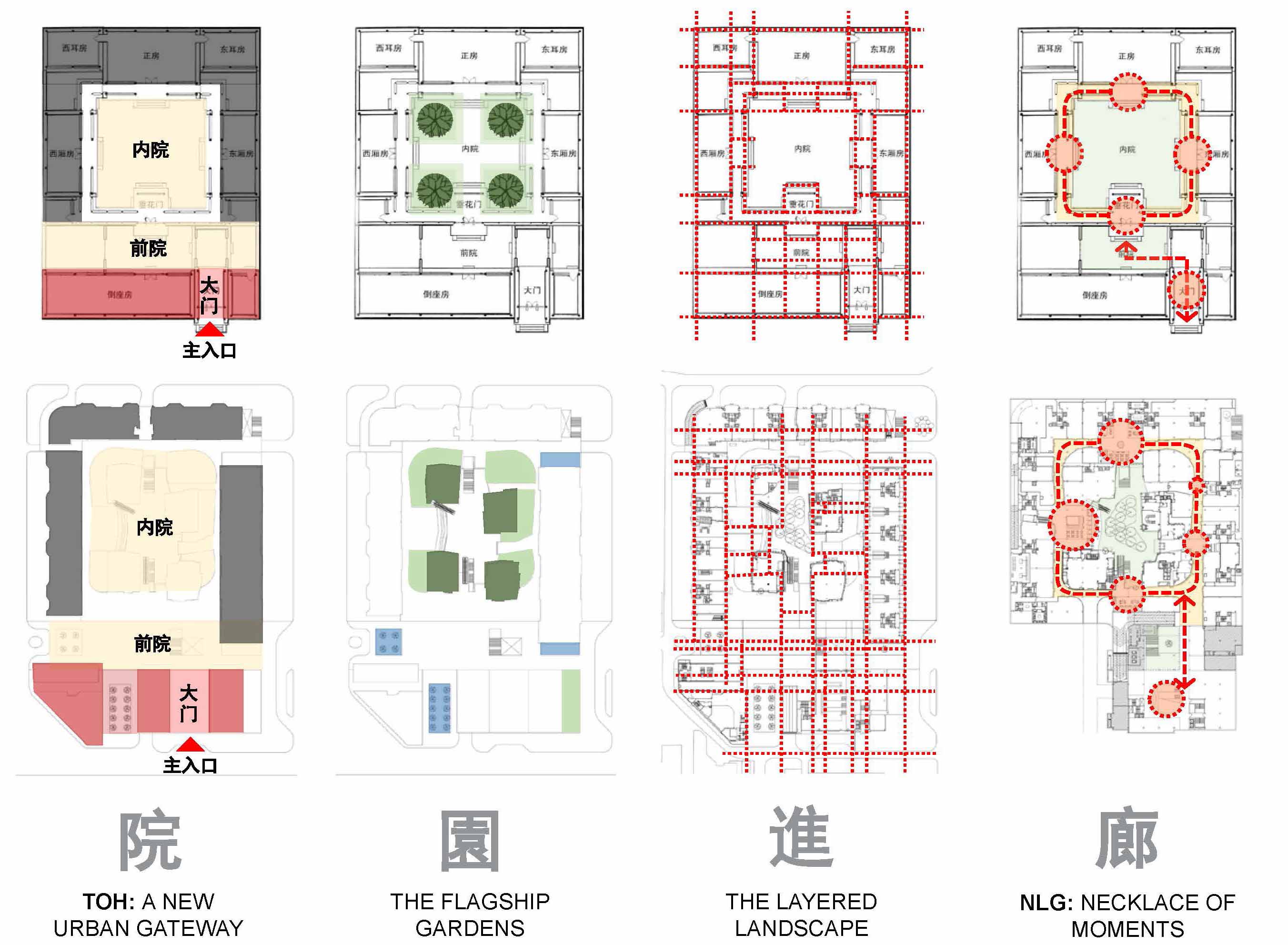
設計構建了“旗艦集群 + 沿街商業集群 + 地下街區”的三級結構。四個核心獨棟定位為頂奢旗艦店,作為場地的視覺與功能錨點;外圍商業集群通過“豎向切分”,為品牌提供了垂直完整的展示麵及相對獨立的入口。立麵策略遵循“內外有別”原則:沿市政路界麵延續原有脈絡,維係城市界麵連續性;內院界麵則以傳統四合院為空間意向,釋放設計餘量,為品牌的建築形象提供“個性自由”。
Designed and constructed a three-level structure consisting of a “flagship cluster + street-front commercial cluster + underground retail street.” The four standalone flagship stores at the core are positioned as top-tier luxury flagships, serving as the visual and functional anchors of the site. The peripheral commercial cluster adopts a “vertical segmentation” approach, offering each brand a complete vertical display facade and a relatively independent entrance. The facade strategy follows the principle of “differentiated design languages for exterior and interior”: along the municipal road interface, the original architectural language is continued to maintain the continuity of the urban fabric; while the inner courtyard interface draws on the spatial concept of the traditional Chinese courtyard house (siheyuan), allowing design flexibility and granting each brand “individual freedom” in its architectural expression.
∇ 四合院意向的公共空間分析 / Analysis of Public Space in the Concept of Siheyuan (Courtyard House) Credit: the Oval Partnership
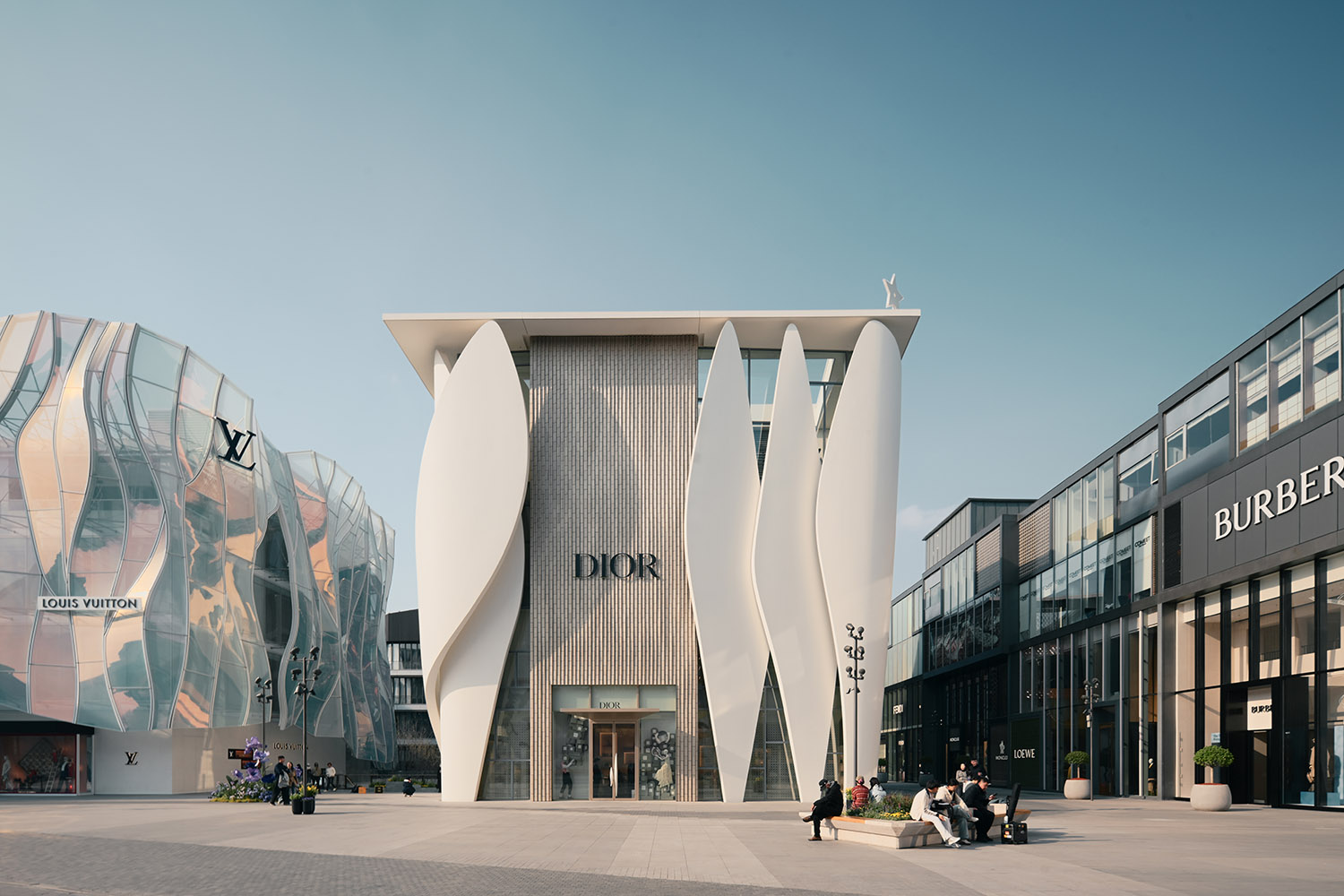
∇ 更新後的三裏屯北區前廣場 / The renovated Sanlitun North District front plaza
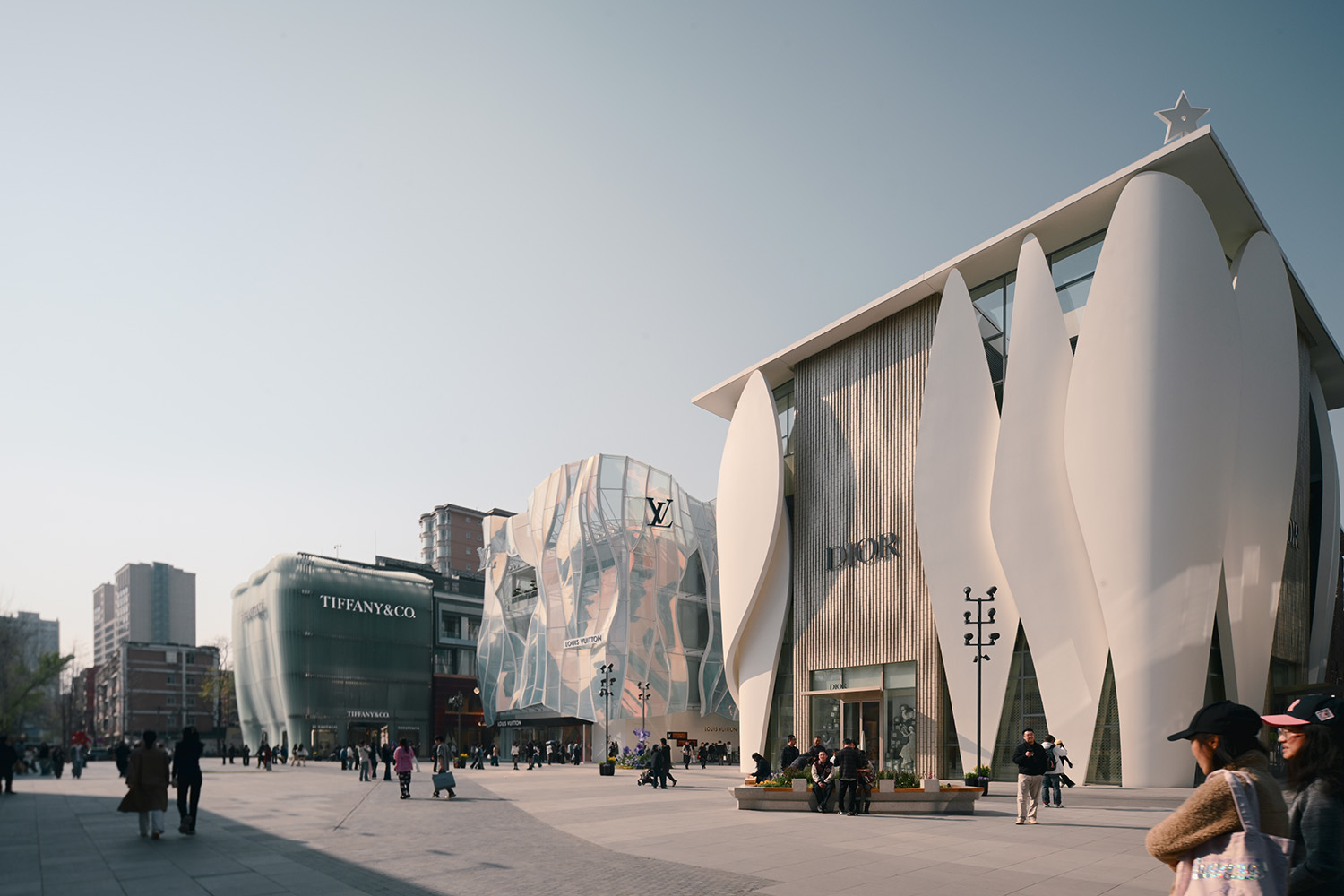
∇ 前廣場——“前院”邏輯下的場域界定 / Front Plaza – Domain Definition via “Front Courtyard” Logic
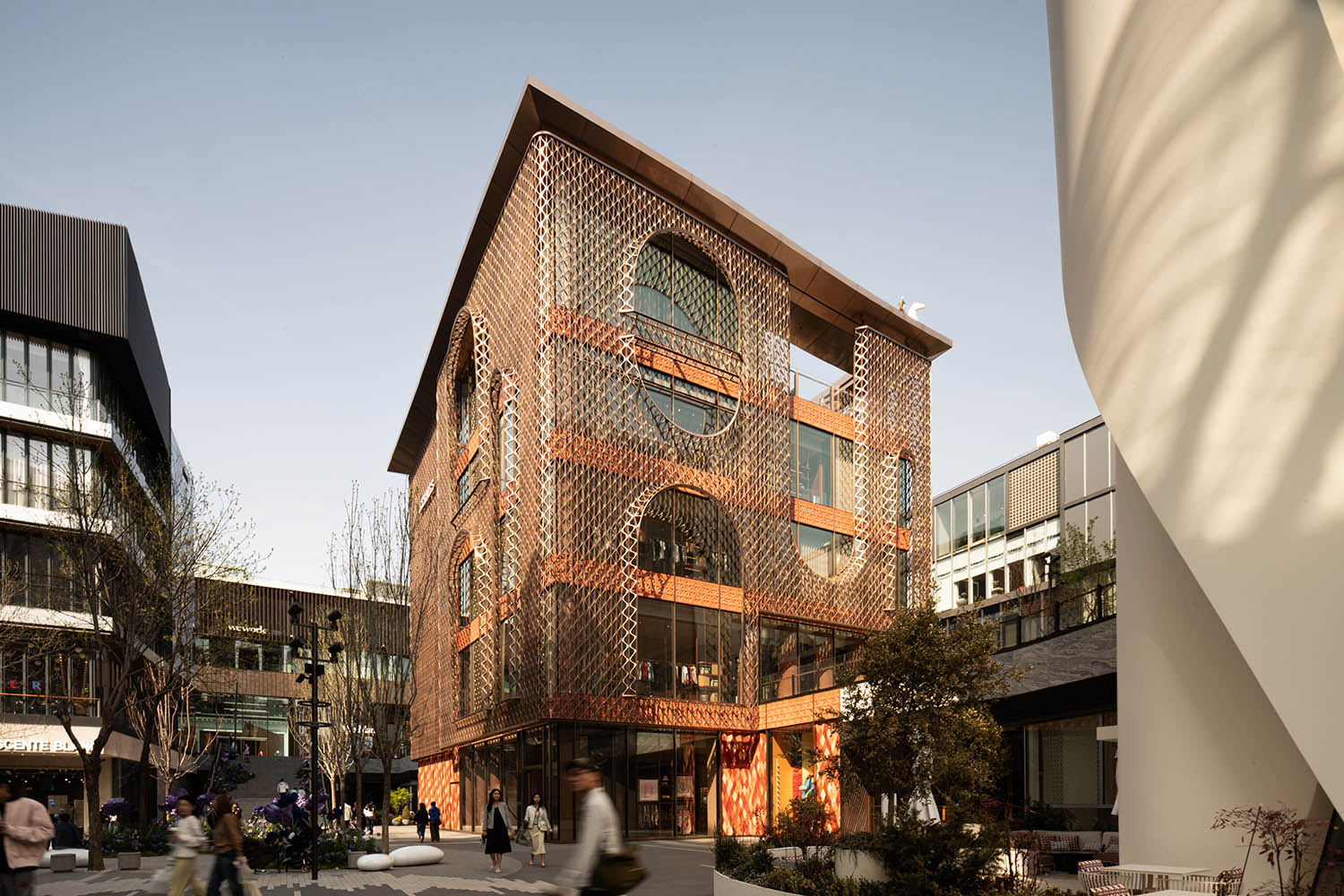
∇ 建築間隙——胡同尺度的“深巷”探索感 / Building Interstices – “Deep Alley” Exploration in Hutong Scale
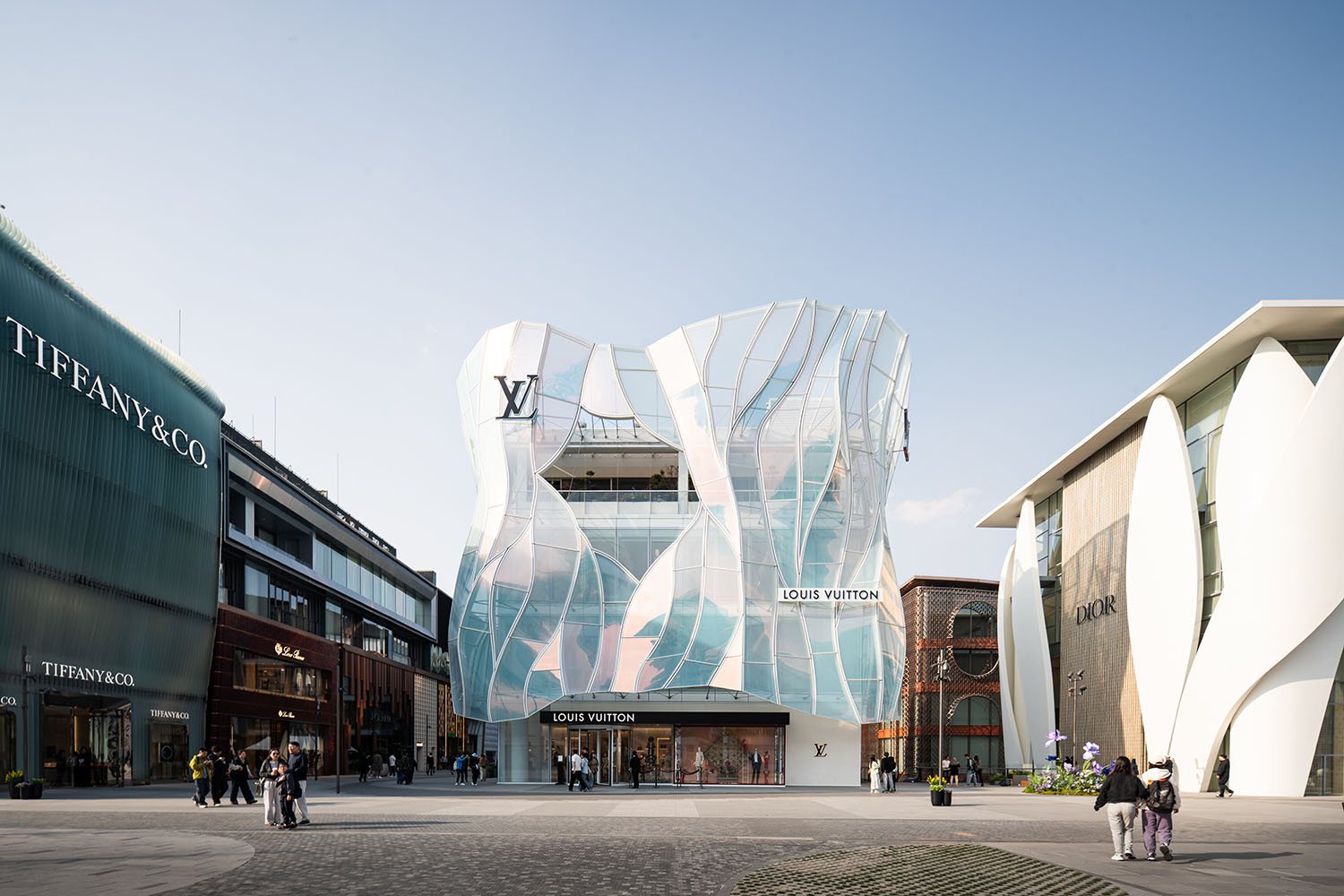
∇ 前廣場–路易威登立麵 / Front Plaza – Louis Vuitton Facade





評論(0)